
Scaling and Root Planing
Scaling and Root Planing in Collegeville, PA
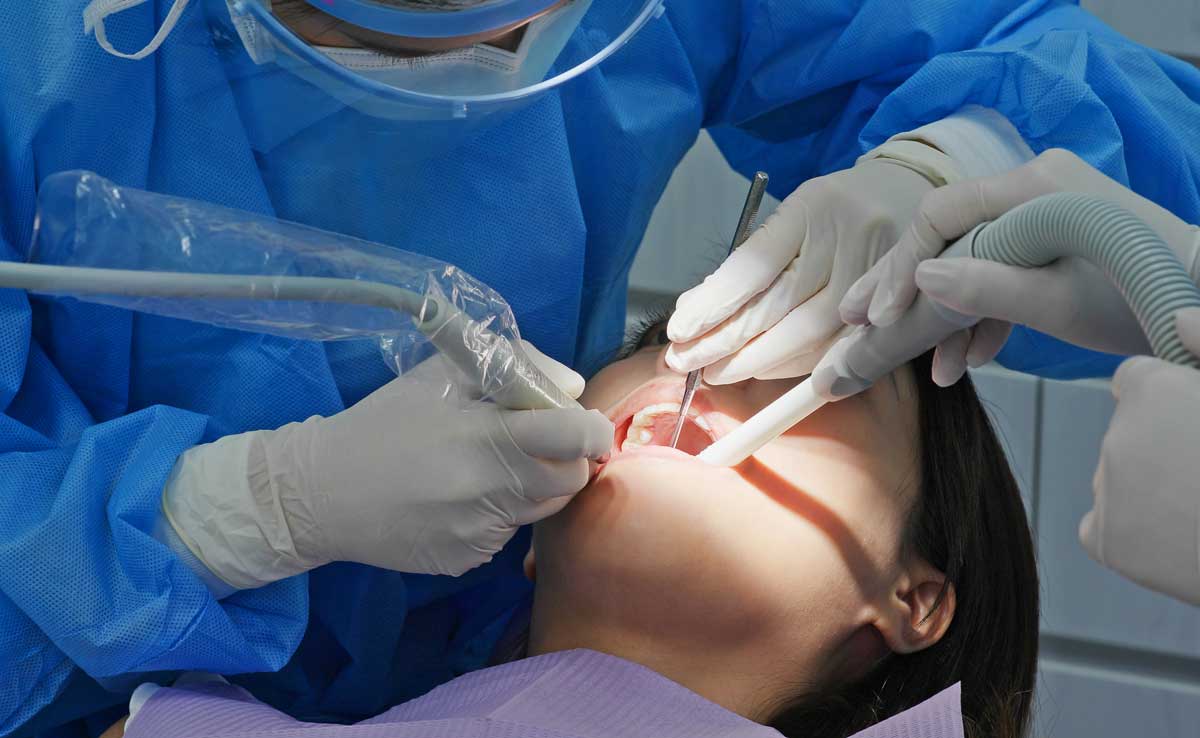
If your gums bleed easily, feel tender, or have started to pull away from your teeth, you may need more than a routine cleaning. Scaling and root planing — often called a “deep cleaning” — is a non-surgical treatment that removes plaque and tartar from below the gumline and smooths the tooth root so your gums can heal and reattach. Dr. Albina Veys and her team provide scaling and root planing for patients throughout Collegeville, Phoenixville, Limerick, Skippack, Pottstown, and King of Prussia.
What Is Scaling and Root Planing?
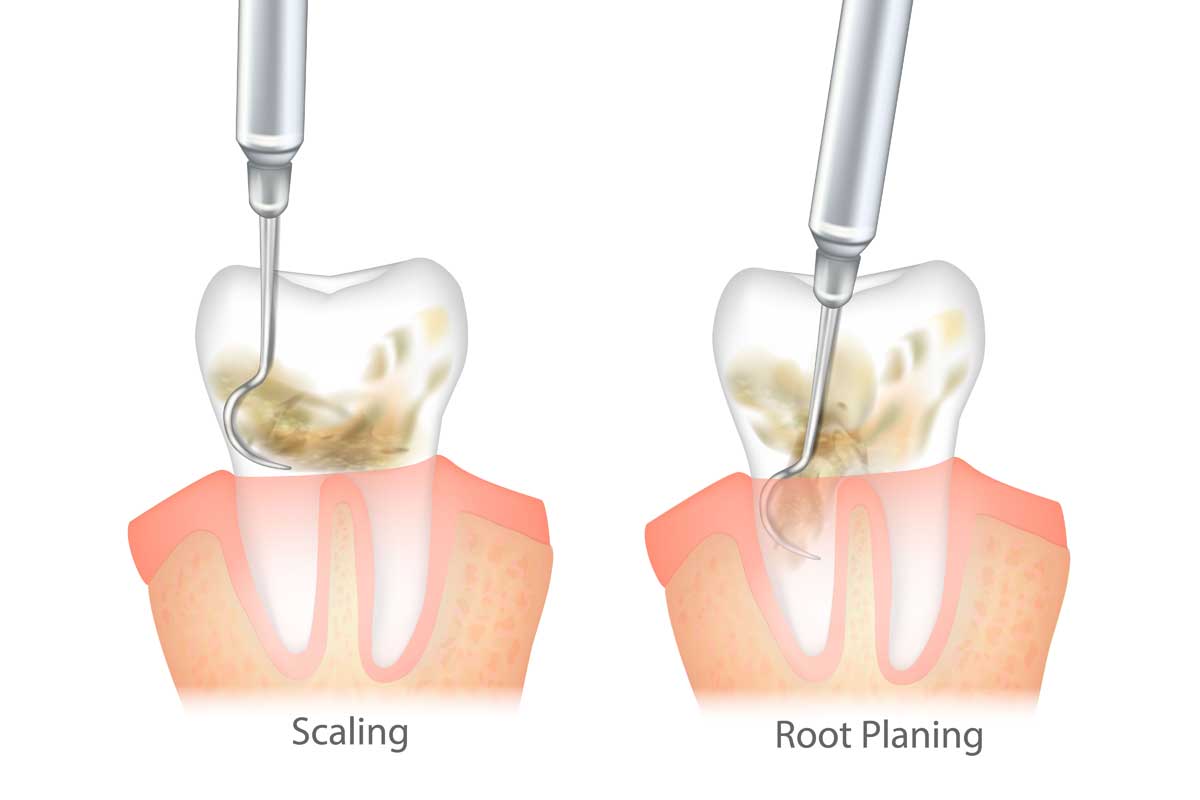
Scaling and root planing is a two-step, non-surgical procedure used to treat gum disease (periodontal disease) before it progresses to a point where surgery is needed.
Scaling removes plaque, bacteria, and calculus (hardened tartar) from the tooth surface and from the pockets between your teeth and gums.
Root planing smooths the root surface itself, eliminating the rough, bacteria-laden layer where plaque tends to collect and re-form. A smooth root surface gives your gum tissue a clean foundation to reattach to.
Unlike a standard cleaning, which addresses the visible tooth surface above the gumline, scaling and root planing treats the areas below the gumline where gum disease actually develops.
Signs You May Need Scaling and Root Planing
You may be a candidate for this treatment if you notice:
- Gums that bleed when you brush or floss
- Red, swollen, or tender gums
- Persistent bad breath
- Gums that appear to be pulling away from your teeth
- Loose or shifting teeth
- Deeper-than-normal spaces (pockets) between your teeth and gums, as measured at a dental exam
These are common signs of gingivitis or periodontitis. Left untreated, gum disease is a leading cause of tooth loss in adults — catching it early with scaling and root planing can often prevent more invasive treatment down the road.
What to Expect During Treatment
Before beginning, Dr. Veys will measure the depth of your gum pockets and take X-rays if needed to assess bone health around your teeth. Depending on the extent of the disease, treatment is typically completed in one or two visits, with local anesthesia used to keep you comfortable.
In some cases, we use laser dentistry alongside scaling and root planing to further reduce bacteria and decontaminate infected gum pockets — a gentler, more precise option for many patients. Learn more about our laser dentistry options.
Benefits of Scaling and Root Planing
- Reduces gum bleeding and inflammation
- Helps gums reattach more tightly to the tooth root
- Decreases pocket depth, making at-home cleaning more effective
- Slows or stops the progression of gum disease
- Freshens breath by removing bacteria below the gumline
- Helps protect against tooth loss and bone loss
Recovery and Aftercare
Mild sensitivity to hot, cold, or sweets is normal for the first one to two weeks and generally resolves within six weeks. Most patients feel noticeably better within just a few days. To support healing, we recommend:
- Gentle brushing and flossing two to three times daily
- Rinsing with warm salt water to ease discomfort
- Using a prescribed antimicrobial rinse if recommended
- Using a desensitizing toothpaste if needed
We’ll schedule a follow-up visit four to six weeks after treatment to check your healing progress, and recommend periodontal maintenance cleanings — typically every three months — to keep gum disease from returning.
Download our full patient guide: What to Expect After Scaling & Root Planing (PDF)
Why Choose Albina Veys, DMD for Gum Disease Treatment
Dr. Albina Veys has been treating patients in Collegeville since earning her DMD from the University of Pennsylvania School of Dental Medicine. As a member of the American and Pennsylvania Dental Associations, she brings advanced training — including laser dentistry — to periodontal care, so patients can often avoid a referral to a specialist for early-stage gum disease. Meet Dr. Veys and our team.
Frequently Asked Questions
Does scaling and root planing hurt?
Local anesthesia is used to numb the treatment area, so the procedure itself is generally painless. Mild soreness or sensitivity for a few days afterward is normal and manageable with over-the-counter pain relievers.
How is scaling and root planing different from a regular cleaning?
A regular cleaning (prophylaxis) removes plaque and tartar above the gumline to maintain healthy gums. Scaling and root planing treats gum disease that has already developed below the gumline, reaching deeper pockets that a routine cleaning cannot.
How many appointments does it take?
Most patients complete treatment in one to two visits, often divided by the side of the mouth (upper/lower or left/right), depending on the severity of the gum disease.
Will my dental insurance cover scaling and root planing?
Many dental insurance plans cover scaling and root planing, at least partially, since it’s considered a medically necessary treatment for gum disease. Our team can help verify your benefits before treatment. Learn more about insurance and financial policy.
How often will I need maintenance visits after treatment?
Most patients return every three months for periodontal maintenance cleanings, rather than the standard six-month interval, to keep gum disease from returning.
Schedule Your Gum Health Evaluation
If you’re experiencing bleeding gums, bad breath, or other signs of gum disease, don’t wait for it to progress. Dr. Veys and her team serve patients throughout Collegeville, Phoenixville, Limerick, Skippack, Pottstown, and King of Prussia.
Schedule an appointment today
Phone: 610-489-6663
Address:
Albina Veys, DMD
104 South 2nd Avenue
Collegeville, PA 19426
Telephone:
Phone: 610-489-6663
Fax: 610-489-3926
Email:
Email: Office
Request An Appointment
The first step towards a beautiful, healthy smile is to schedule an appointment. Please contact our office by phone or complete the appointment request form below. Our scheduling coordinator will contact you to confirm your appointment.