
If you’re considering dental implants, you’re already on the path toward restoring more than just your smile — you’re investing in your long-term oral health, confidence, and comfort. Still, one of the most common questions we hear from patients is simple and completely understandable:
“How long does the dental implant process actually take?”
The truth is, dental implants aren’t a one-visit solution — and that’s a good thing. Each step is carefully planned to ensure stability, durability, and a natural-looking result that can last a lifetime. In this guide, we’ll walk you through the dental implant process timeline step by step, so you know exactly what to expect and can move forward with confidence.
Why You Might Need a Dental Implant
Dental implants are often recommended when a tooth is missing, damaged beyond repair, or affecting your overall oral health. You may be a good candidate for dental implants if:
- You’ve lost a tooth due to decay, trauma, or gum disease
- You want a permanent alternative to removable dentures or partials
- You need support for a dental bridge
- You want to prevent bone loss in the jaw
Unlike temporary solutions, dental implants replace both the tooth and the root, making them the gold standard for tooth replacement.
The Long-Term Benefits of Dental Implants
Patients choose dental implants because they offer unmatched advantages compared to other tooth replacement options.
Permanent and Stable
Once healed, dental implants are fixed securely in the jaw — no slipping, shifting, or adhesives.
Natural Look and Feel
Implants are custom-designed to match your natural teeth in color, shape, and function.
Bone Preservation
Implants stimulate the jawbone, helping prevent bone loss and facial sagging over time.
Improved Chewing and Speech
Enjoy your favorite foods again without worry or discomfort.
Easy Maintenance
Brush and floss your implants just like natural teeth — no special routines required.
With proper care, dental implants can last 20 years or longer — often a lifetime.
Dental Implant Process Timeline: Step-by-Step Guide
Every patient’s treatment plan is unique, but most dental implant timelines follow a similar structure. Here’s how the process typically unfolds.
1. Initial Dental Implant Consultation
Your journey begins with a comprehensive dental implant consultation. During this visit, our dental team will:
- Review your medical and dental history
- Take digital X-rays or a 3D CT scan
- Evaluate bone density and gum health
- Discuss your goals, concerns, and treatment options
This appointment allows us to determine whether dental implants are right for you and create a customized treatment plan tailored to your needs.
2. Personalized Treatment Planning
Once you’re approved for implants, we map out every detail of your care, including:
- The number of implants needed
- Implant placement location
- Whether bone grafting or sinus lift procedures are required
- Expected healing timelines
- Final restoration options (crown, bridge, or denture)
You’ll leave with a clear understanding of the process — no surprises, no guesswork.
3. Tooth Extraction (If Necessary)
If a damaged or failing tooth is still present, it will need to be removed before implant placement.
- Simple extractions typically heal in 1–2 weeks
- More complex extractions may require additional healing time
In some cases, implants can be placed immediately after extraction, depending on bone health and stability.
4. Bone Grafting (When Required)
Not every patient needs bone grafting, but it’s common when bone loss has occurred due to missing teeth or gum disease.
Bone grafting helps:
- Strengthen the jawbone
- Create a stable foundation for the implant
- Improve long-term implant success
Healing after bone grafting usually takes 3–6 months, allowing new bone to integrate fully.
5. Dental Implant Placement Surgery
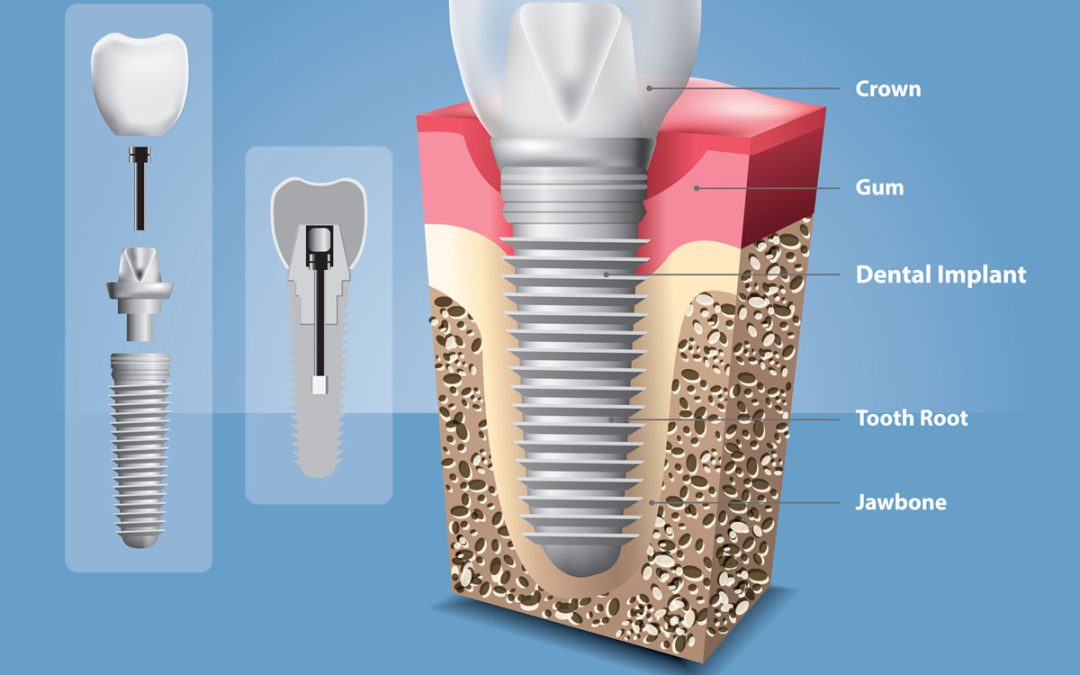
Once the jawbone is ready, the implant post — a small titanium screw — is placed into the bone.
- Performed under local anesthesia (with sedation options available)
- Typically takes less than an hour per implant
- Most patients report minimal discomfort
After placement, a healing cap may be attached to protect the implant site.
6. Healing and Osseointegration
This is the most important phase of the dental implant timeline.
Over the next 3–6 months, the implant fuses with the jawbone through a process called osseointegration. This creates a strong, permanent foundation for your new tooth.
During this phase:
- Temporary restorations may be used
- Mild soreness is normal and manageable
- A soft-food diet may be recommended initially
Patience here pays off — this step ensures long-term stability.
7. Abutment Placement
Once healing is complete, a small connector piece called an abutment is attached to the implant.
- The abutment sits above the gumline
- It supports the final crown or restoration
- Minor gum healing may occur over 1–2 weeks
This step prepares the implant for its final visible tooth.
8. Final Dental Restoration
Now comes the most exciting part — your new smile.
Your custom crown, bridge, or denture is:
- Designed to match your natural teeth
- Carefully fitted for comfort and function
- Permanently secured to the abutment
The result is a tooth that looks, feels, and functions like the real thing.
The complete dental implant process typically takes 3–9 months, depending on individual needs.
9. Long-Term Care and Maintenance
Dental implants don’t require special care — just consistent habits.
- Brush twice daily
- Floss regularly
- Use water flossers or implant-safe tools if recommended
- Visit your dentist every 6 months
With good oral hygiene and routine dental visits, your implant can last decades.
Frequently Asked Questions About Dental Implants
How long does a dental implant take from start to finish?
Most cases take between 3 and 9 months, depending on healing and whether grafting is required.
Does getting a dental implant hurt?
The procedure is well-tolerated with anesthesia. Mild soreness afterward is normal and temporary.
Can multiple implants be placed at once?
Yes. Many patients receive multiple implants in a single appointment.
What’s the difference between an implant and a crown?
The implant replaces the tooth root; the crown is the visible tooth on top.
Schedule Your Dental Implant Consultation Today
If you’re considering dental implants, our team is here to guide you every step of the way — from your first consultation to your final, confident smile. Whether you need a single tooth replaced or a full-mouth solution, we’re committed to personalized, high-quality care.
Contact our Collegeville office today at 610-489-6663 or fill out our form to schedule your dental implant consultation and take the next step toward a healthier, more confident smile.