
Healthy gums do more than frame your smile. They help hold your teeth securely in place and protect the tissues underneath. When plaque and tartar build up around the teeth and below the gumline, however, bacteria can trigger inflammation and contribute to gum disease.
When a routine dental cleaning is not enough to remove these deposits, your dentist may recommend scaling and root planing, often called a deep dental cleaning. This nonsurgical treatment is designed to clean areas that are difficult to reach with regular brushing, flossing, and routine professional cleanings.
If you have been told you need scaling and root planing, you may have questions. What exactly does the procedure involve? Why is it recommended? Does it hurt? And what should you expect afterward?
Let’s take a closer look.
What Is Scaling and Root Planing?
Scaling and root planing is a nonsurgical periodontal treatment used to remove plaque, tartar, and bacteria from the teeth and surfaces below the gumline. The goal is to create a cleaner environment so the gums have an opportunity to heal and become healthier.
The two parts of the treatment work together, but they have different purposes.
What Is Dental Scaling?
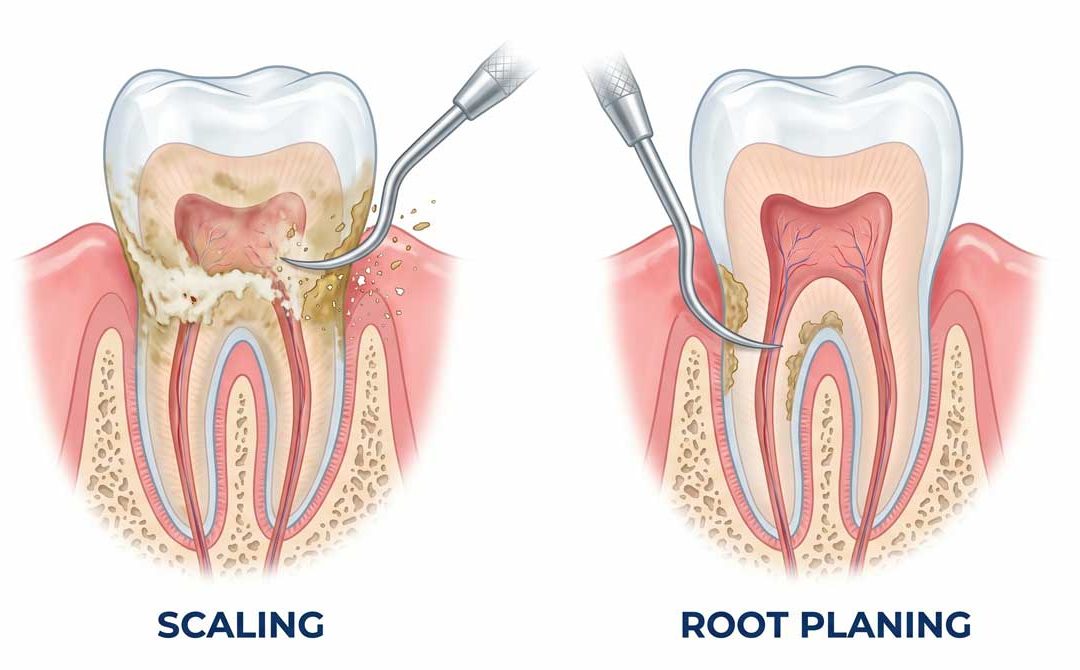
Dental scaling involves carefully removing hardened tartar, also called calculus, from the surfaces of the teeth. Tartar cannot be completely removed with a toothbrush or dental floss once it has hardened, which is why professional dental care is important.
During scaling, a dental professional uses specialized instruments to remove plaque and tartar from above and, when necessary, below the gumline. Depending on the practice and treatment needs, ultrasonic instruments and hand instruments may be used.
Removing these deposits helps reduce the amount of harmful bacteria contributing to gum inflammation.
What Is Root Planing?
Root planing focuses on the surfaces of the tooth roots below the gumline. When gum disease causes the gums to pull away from the teeth, pockets can develop where bacteria and debris collect.
Root planing carefully smooths contaminated areas of the root surfaces after deposits have been removed. A smoother root surface makes it more difficult for plaque and bacteria to accumulate and can support healthier gum tissue.
Think of it as cleaning and smoothing an area that a regular toothbrush simply cannot reach.
Why Is Scaling and Root Planing Recommended?
One of the most common reasons dentists recommend scaling and root planing is the presence of periodontal disease.
Gum disease can begin with gingivitis, which causes red, swollen, or bleeding gums. Without appropriate care, gum disease can become more advanced and affect the tissues and bone that support the teeth.
Scaling and root planing can be an important part of treatment for certain patients with periodontal disease because it removes the bacterial deposits responsible for much of the inflammation.
Your dentist will determine whether this treatment is appropriate based on your gum health, pocket measurements, amount of tartar, inflammation, and other clinical findings.
Benefits of Scaling and Root Planing
When recommended as part of a personalized periodontal treatment plan, scaling and root planing can provide several important benefits for your oral health.
Helps Treat Gum Disease
Removing plaque, tartar, and bacteria from below the gumline can help control the infection and inflammation associated with periodontal disease.
Helps Prevent Gum Disease From Getting Worse
Untreated periodontal disease can become more serious over time. Depending on its severity, it can contribute to gum recession, damage to the supporting bone, loose teeth, and eventually tooth loss.
Treating gum disease earlier can help protect the structures that support your teeth.
Supports Healthier Gums
Once harmful deposits have been removed, the gums have a better environment in which to heal. Healthier gums are less likely to remain swollen, tender, or prone to bleeding.
Protects Your Natural Teeth
Your gums and the bone surrounding your teeth provide essential support. Maintaining periodontal health is therefore an important part of keeping your natural teeth healthy for as long as possible.
Improves Your Overall Oral Hygiene
A thorough professional cleaning below the gumline can make it easier to maintain a cleaner mouth at home. Your dentist or hygienist can also show you techniques for brushing and flossing more effectively.
What Happens During Scaling and Root Planing?
Knowing what to expect can make any dental procedure feel less intimidating. Your exact experience will depend on the condition of your gums and the amount of treatment you need.
- Your Gums Will Be Evaluated
Before treatment begins, your dental professional will evaluate your gums and overall oral health. This may include checking for inflammation, bleeding, gum recession, tartar buildup, and the depth of the spaces or pockets around your teeth.
These findings help determine whether scaling and root planing is appropriate and which areas require treatment.
- The Area May Be Numbed
Depending on the extent of treatment and your individual needs, local anesthesia may be used to keep you comfortable while the deeper areas around the teeth are cleaned.
If you are nervous about the procedure, let your dental team know. Communication is an important part of comfortable dental care.
- Plaque and Tartar Are Removed
Specialized dental instruments are used to remove plaque, tartar, and bacterial deposits from the teeth and beneath the gumline.
Because these areas are deeper than those addressed during an ordinary cleaning, the process can take longer than a routine dental hygiene appointment.
- The Root Surfaces Are Carefully Smoothed
After deposits have been removed, the root surfaces are carefully planed to eliminate remaining contaminants and smooth rough areas.
This creates a cleaner surface and supports the gums as they heal.
- Your Dentist Will Discuss Follow-Up Care
Scaling and root planing is not necessarily the end of periodontal treatment. Your dentist may recommend a follow-up visit to evaluate how your gums are responding.
Depending on your condition, you may also need ongoing periodontal maintenance, professional cleanings at recommended intervals, and a consistent home-care routine.
Is Scaling and Root Planing the Same as a Regular Dental Cleaning?
No. Although both procedures involve removing plaque and tartar, they serve different purposes.
A routine dental cleaning is generally intended to maintain oral health and remove deposits from accessible areas of the teeth. Scaling and root planing is a more extensive treatment designed to address plaque, tartar, and bacteria associated with gum disease, including deposits below the gumline.
Your dentist will determine which type of cleaning you need based on your oral and periodontal health.
Does Scaling and Root Planing Hurt?
Many patients are concerned about discomfort, but steps can be taken to make the procedure as comfortable as possible. Local anesthesia may be used when appropriate, particularly when treatment involves areas below the gumline.
After treatment, some people experience temporary gum tenderness or tooth sensitivity. Your dental team can provide personalized instructions for caring for your mouth during recovery.
If you experience unusual or persistent discomfort after treatment, contact your dental office for guidance.
How Can You Maintain Healthy Gums After Treatment?
Professional periodontal treatment is only part of the equation. Your daily habits matter, too.
Brush your teeth twice a day using proper technique and clean between your teeth every day. Depending on your individual needs, your dentist may recommend traditional floss, interdental brushes, or another method for cleaning between your teeth.
Regular dental visits are also important. Gum disease can return or continue to progress if plaque and tartar are allowed to accumulate again.
If you smoke or use tobacco products, talk with your dental professional about quitting. Tobacco use is an important risk factor for periodontal disease and can make treatment and healing more difficult.
Most importantly, follow the personalized recommendations provided by your dental team. Your mouth is not exactly like anyone else’s, so your maintenance plan should not be either.
When Should You Talk to a Dentist About Your Gums?
Do your gums bleed when you brush or floss? Have you noticed persistent bad breath, swollen or tender gums, gum recession, or changes in how your teeth fit together?
These symptoms should not simply be ignored.
Gum disease does not always cause obvious discomfort, especially in its earlier stages. A professional evaluation can identify problems that may not be apparent when you look in the mirror.
The sooner a concern is identified, the sooner you and your dentist can discuss appropriate treatment.
 |
Proudly Recognized as a Top Dentist in 2026Dr. Albina Veys DMD, Main Line Today Top Dentist 2026, reflecting her commitment to excellence, experience, and patient-centered care in Collegeville, PA. |
Frequently Asked Questions About Scaling and Root Planing
How long does scaling and root planing take?
Treatment time varies depending on how much tartar is present, the number of areas being treated, and the severity of gum disease. Your dental office can explain how long your specific appointment is expected to take.
How fast do I really need to see a dentist after a tooth gets knocked out?
Ideally within 30 minutes. Research shows reimplantation success rates as high as 90% within that window, dropping off noticeably after the first hour. Keep the tooth moist in milk or saliva, handle it only by the crown, and call ahead — at Albina Veys DMD, we prioritize getting knocked-out tooth patients in the door immediately.
Can I just go to the ER for severe tooth pain instead?
You can, particularly if it’s paired with fever, facial swelling, or trouble breathing or swallowing. But ERs typically can’t perform definitive dental treatment like root canals or extractions — they’ll manage pain and infection and point you back to a dentist for the actual fix. For anything dental-specific, calling an emergency dentist in Collegeville, PA first is usually the faster, more direct path to relief.
My child just had a dental emergency — what now?
Stay calm first; kids take their emotional cues from you. Apply gentle pressure with clean gauze for bleeding. If it’s a baby tooth that’s been knocked out, don’t try to reinsert it — just save it and call us. Permanent teeth follow the same steps as an adult emergency. Our team provides pediatric dentistry alongside general family care, so your child can see a familiar, friendly face even during a stressful moment.
How do I lower my odds of ever needing emergency dental care?
Brush twice daily, floss once a day, and keep up with checkups every six months so small issues get caught early. Wear a mouthguard for sports, stop using your teeth to open packages, skip the ice-chewing habit, and get a custom nightguard if you grind at night. Address a cracked tooth or loose filling the moment you notice it rather than waiting — that’s often the difference between a routine filling and a late-night emergency.
Is it safe to take pain medication before my dental appointment?
Generally yes — ibuprofen or acetaminophen, taken according to package directions, can help you get comfortable before you’re seen. Just let us know what you’ve taken and when. Skip aspirin right before any procedure, since it can increase bleeding, and never place it directly against your gums or tooth.
What are the warning signs of a serious dental infection?
Look for severe throbbing pain, visible swelling in the gums, face, or jaw, fever, a bad taste in your mouth, difficulty swallowing or breathing, and a tender bump on the gum line. Swollen lymph nodes, fatigue, and sensitivity to hot or cold are supporting signs. Because dental infections can spread beyond the mouth if untreated, don’t sit on these symptoms — call our office right away.
DENTAL SCALING & ROOT PLANING — TAKE THE NEXT STEP TOWARD HEALTHIER GUMS WITH EXPERT, COMPASSIONATE CARE IN COLLEGEVILLE, PA.
Schedule a Visit Today
Call Dr. Albina Veys at 610-489-6663